Flooring for Hospitals
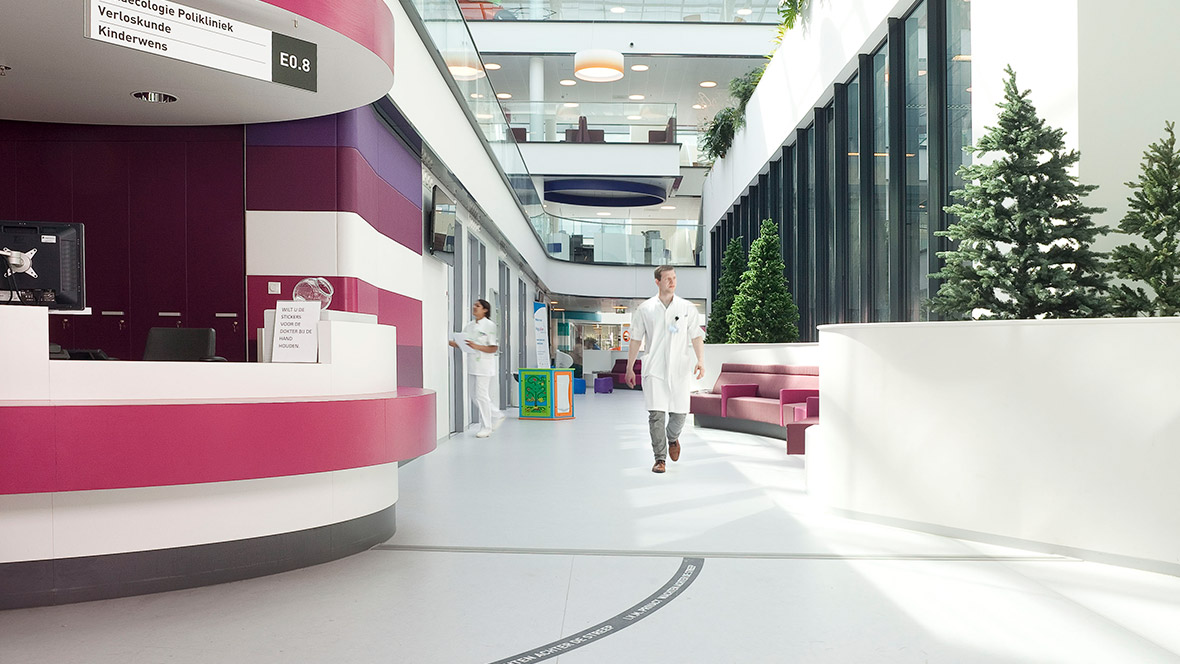

Need a hospital floor covering that's both hygienic and safe underfoot? Forbo's healthcare flooring combines hygiene, durability and slip resistance. Explore non-slip hospital flooring designed to keep patients and staff safe in demanding settings.
Hospitals are complex environments where each space has its own requirements. From sterile operating theatres to busy corridors and welcoming waiting rooms, flooring must support infection control, safety, durability, and patient comfort. Selecting the right solutions helps hospitals meet Australian Health Facility Guidelines (AusHFG), AS 4586 slip resistance standards, and sustainability targets set by Green Building Council Australia (GBCA).
This guide outlines the key considerations when specifying flooring for hospitals.
Considerations for hospital flooring:
Free samples, pricing, lead times, or a chat with our team - one quick form
Flooring Solutions Applications Across the Hospital
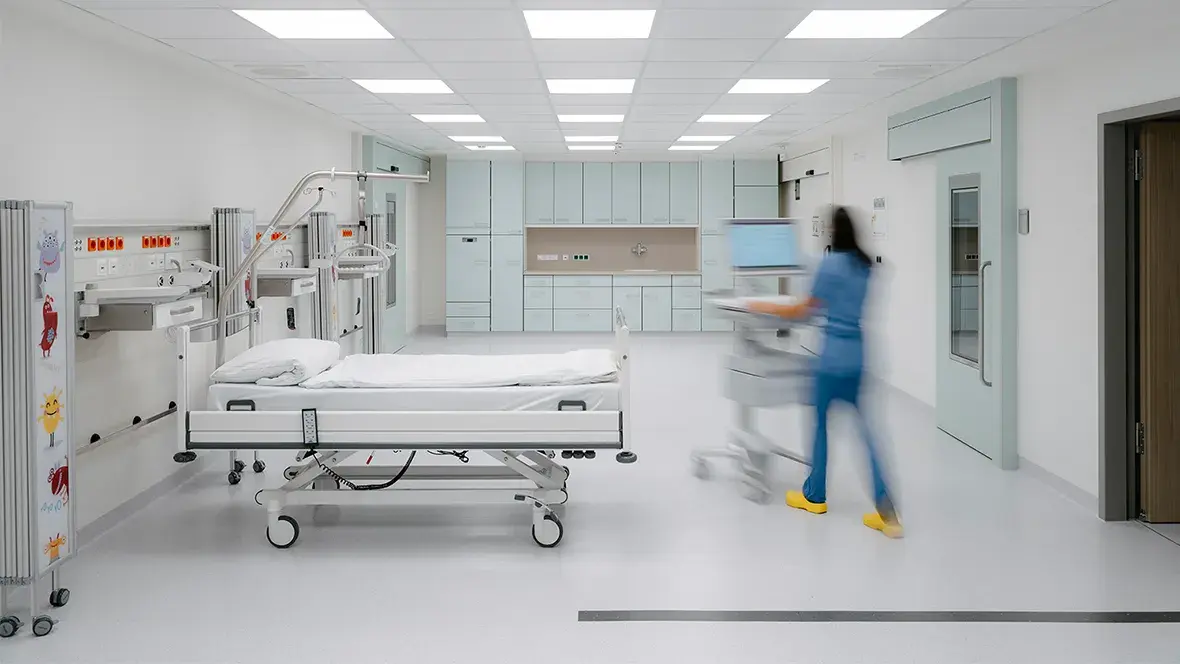
Flooring should be durable, easy-to-clean flooring that balances hygiene and acoustic comfort.
Recommended flooring
.jpg "Sir Charles Gairdner Hospital | Using Heterogenous vinyl in patient ward in a hospital")
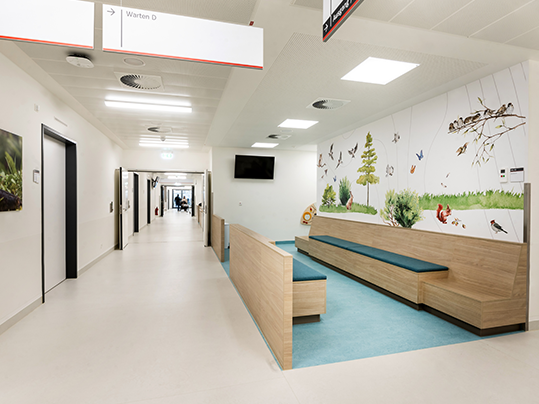
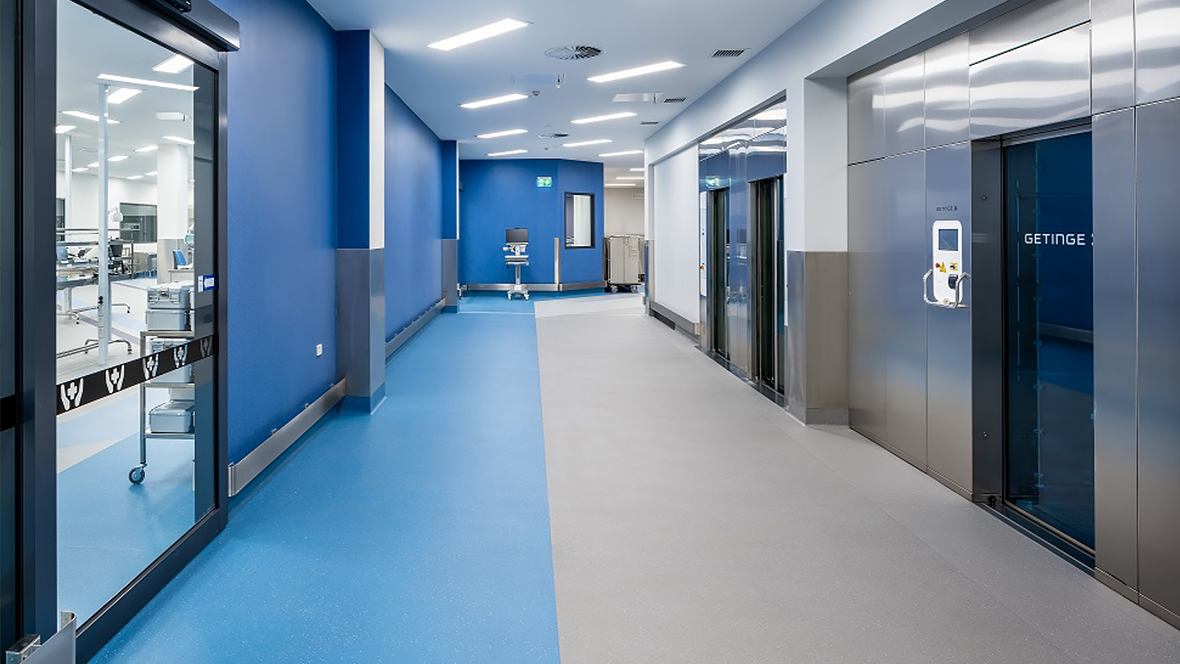
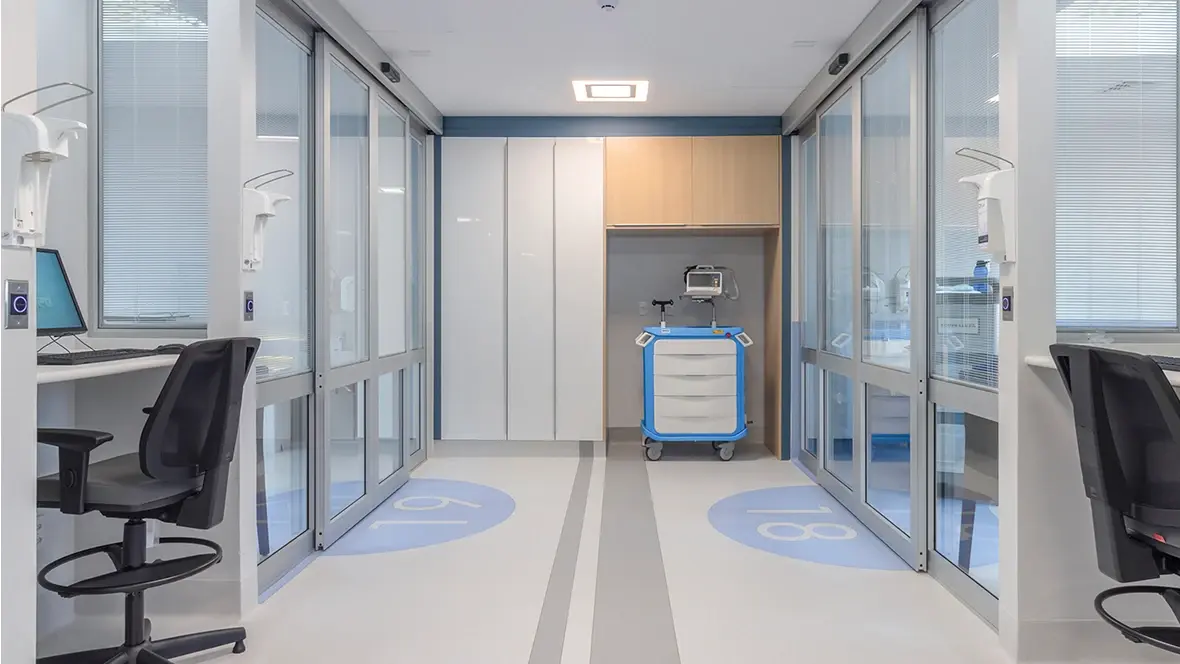
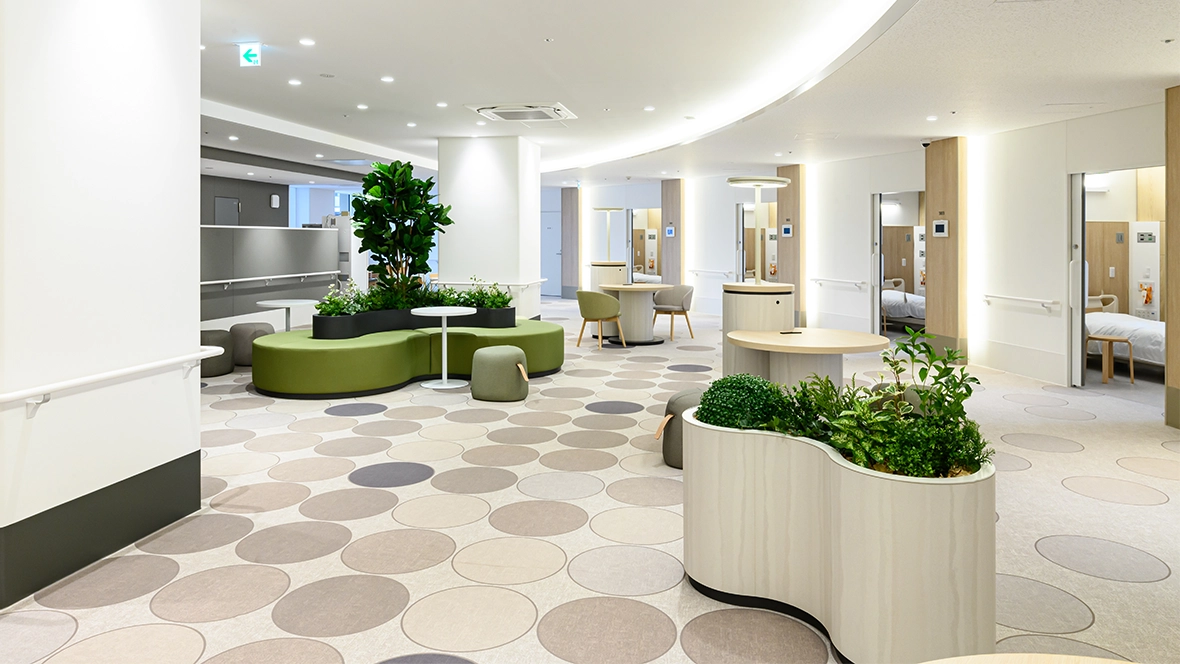
Flooring in corridors and waiting areas should be able to handle high traffic and rolling loads, be easy to maintain, and colour options should support wayfinding and zoning. Fast flooring options reduce downtime in refurbishments.
Recommended flooring:
Bathrooms, en-suites, patient showers, and other wet zones require slip-resistant flooring that can withstand constant moisture and frequent cleaning from the floor to the wall.
Recommended flooring and wall system:
.webp "Surestep balance in healthcare flooring | Wall and flooring solution for hospital patient en suite and toilet areas warm earth")
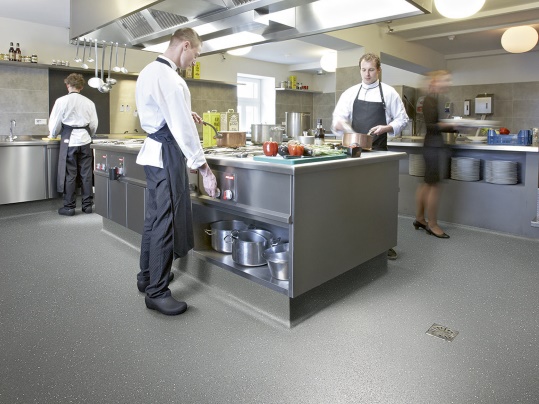
The best flooring for hospital commercial kitchens is a heavy-duty, slip-resistant vinyl safety floor designed for wet environments. It should meet local slip resistance standards of an R12 slip rating.
Recommended flooring:
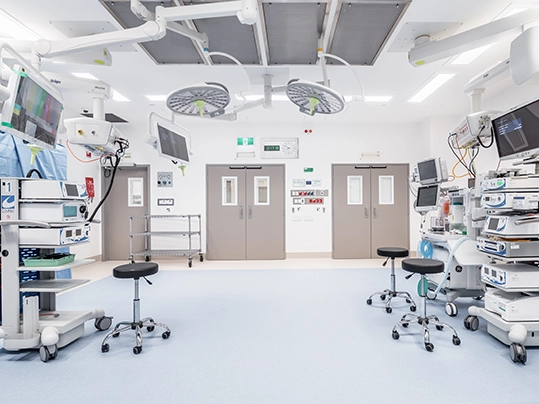
Operating theatres, ICUs, labs and diagnostic imaging rooms require flooring that balances hygiene, static control, and patient comfort.
Before selecting a floor covering, it’s important to confirm whether the project brief specifies that these areas require the floor to be earthed. A fully conductive flooring system like our Sphera EC/SD and Colorex EC/SD is required if the floor must actively discharge static electricity to ground. If not, an antistatic floor is often sufficient to meet the needs of the space. All Forbo flooring solutions are antistatic.
Recommended conductive flooring
Need help?
Free samples, pricing, lead times, or a chat with our team - one quick form
.jpg)

Over 60 years of experience, Forbo is Australia’s trusted brand for reliable commercial flooring solutions.
Learn more

Trusted by medical and healthcare facilities worldwide.
Discover our case studies
What slip rating is required for healthcare flooring?
Slip requirements vary by area within the Hospital/healthcare facilities, outlined in the National Construction Code (NCC) and HB 197:1999 & HB 198:2014 – Table 3B. For example, in Australia, flooring must comply with AS 4586 Slip resistance classifications.
To learn more, download our guide, loved and praised by professionals! Australian Slip Ratings Explained Blog
What flooring is best for hospital corridors?
Resilient sheet flooring, such as homogeneous or heterogeneous vinyl or natural linoleum with heat-welded seams, is commonly specified for hospital corridors. It provides durability under heavy trolley traffic, supports infection control protocols, and can meet national slip resistance requirements while allowing efficient cleaning.
Is linoleum suitable for hospitals?
Yes, linoleum can be suitable for non-critical hospital areas when installed with welded seams and compliant detailing. It offers durability, ease of maintenance, and long-term performance. Specifications should always consider traffic levels, infection control requirements, and local healthcare standards.