

ESD Flooring Guide: Anti-static vs Dissipative vs Conductive
Learn when earthing is required and how to specify it for sensitive zones in Australia.
ESD Flooring Explained: Anti-static vs Dissipative vs Conductive
An expensive flooring mistake in controlled environments isn't choosing the wrong colour, it's specifying antistatic when you needed ESD. Or ESD when antistatic was enough.
Static control is a common source of confusion in commercial and industrial flooring. While many use “anti-static” and "electrostatic discharge (ESD) flooring” interchangeably, they have distinct technical and compliance implications.
This guide explains the difference, where each is used, and how to specify.
What is Antistatic Flooring?
Anti-static flooring
Reduces the generation of static when people walk on it. It’s typically determined with a walk test (EN 1815 is commonly used in Europe).
How it’s tested (EN 1815 walk test)
A floor that achieves ≤ 2kV is considered anti-static; it won’t generate a shock when people walk across the floor in normal use and usually does not require earthing.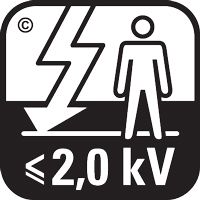
Where to find this information?
Usually found in flooring manufacturers' product technical data sheets, look out for the 'EN 1815' reference. If the value shows ≤ 2kV, this means anti-static.
What is ESD Flooring?
ESD (electrostatic discharge) flooring
Is part of a system that controls and
safely discharges static to earth.
That requires conductive or dissipative flooring + copper conductive tape + conductive adhesive, and grounding strategy (conductive footwear or wrist straps, earth connections, and tested continuity).
Testing standard: Electrical resistance for dissipative (SD) and conductive (EC) floors is measured using EN 1081, the European standard for assessing how well a resilient floor conducts or dissipates static electricity.
*Standards are explained in the Forbo Whitepaper below – ESD standards and test methods.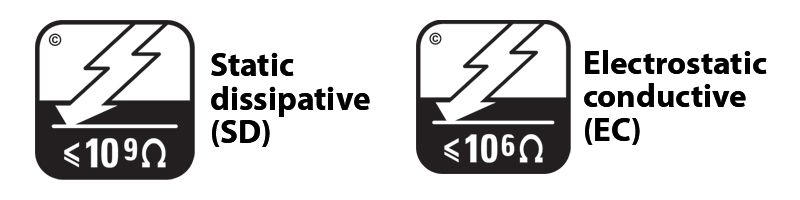
All of Forbo flooring is considered antistatic and has been tested against the EN 1815 walk test.
Do I Need ESD? and if I do which ESD system do I need?
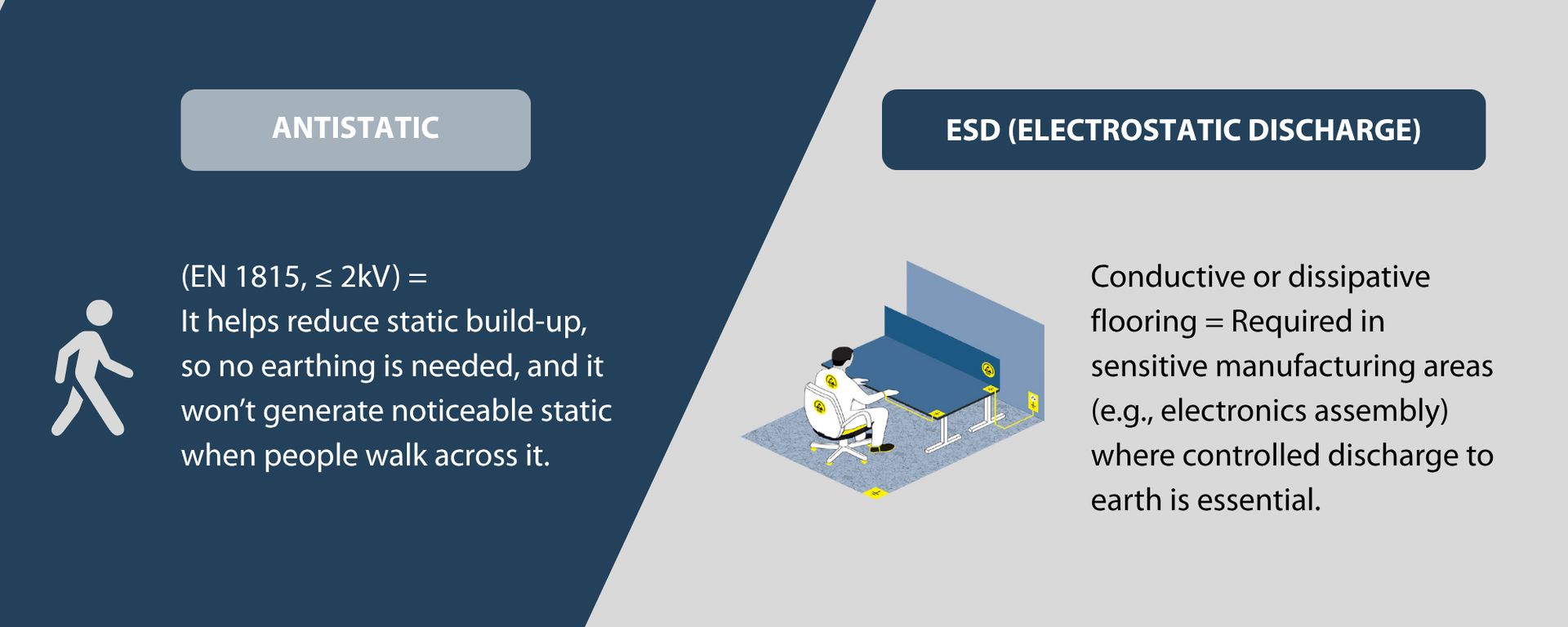
Difference between antistatic and ESD flooring system
When does a project need earthing?
Ask for earthing when the project brief includes:
- Electronics assembly, PCB production, or manufacturing of electro-sensitive devices.
- Cleanrooms or test labs where component damage from ESD would be costly.
- Environments specified in client or industry standards that explicitly require a grounded ESD control system.
Got a server room or comms room on the brief?
Most standard comms rooms only require antistatic performance, meaning any Forbo floor works. Full ESD systems are typically reserved for high-availability datacentres where equipment sensitivity is formally specified. Always confirm and consult with the client or their electrical engineer before upgrading to a full system.
Understanding electrical resistance ratings for flooring
The European standard EN 1081 measures the electrical resistance of resilient flooring designed to control static, specifically static dissipative (SD) and electro-conductive (EC) types.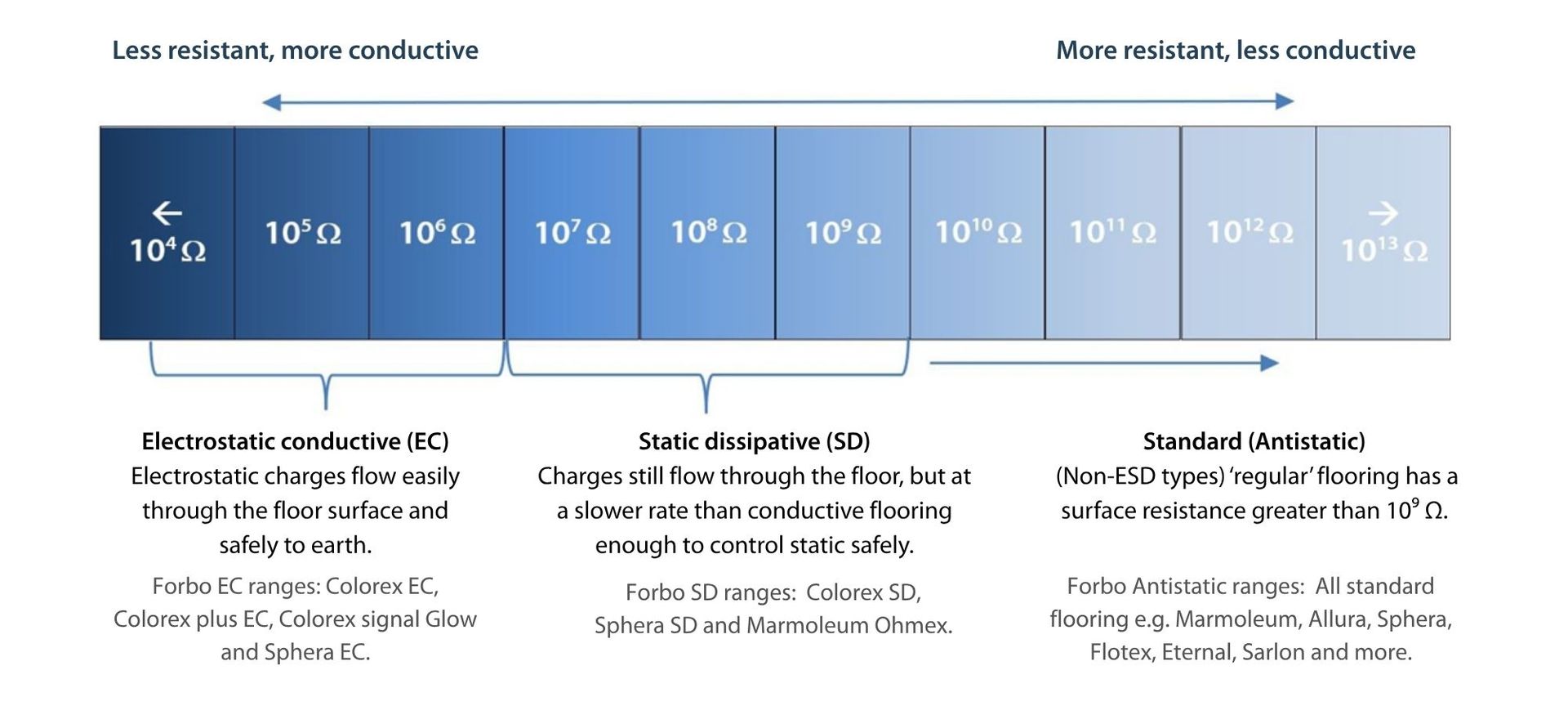


When to specify EC vs SD flooring
Use EC (Conductive) flooring for highly static-sensitive or high-risk areas, such as:
- Semiconductor or electronics manufacturing
- Laboratories handling volatile materials
- Cleanrooms and data centres
Use SD (Dissipative) flooring where moderate static control is needed, such as:
- Healthcare and operating theatres
- Pharmaceutical manufacturing
- Printing or packaging areas
view our static control collection
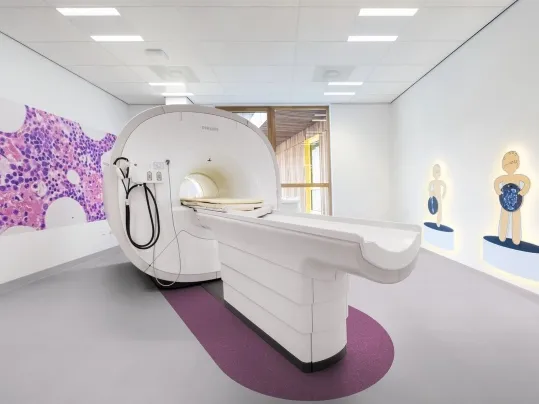
Example: ESD flooring system
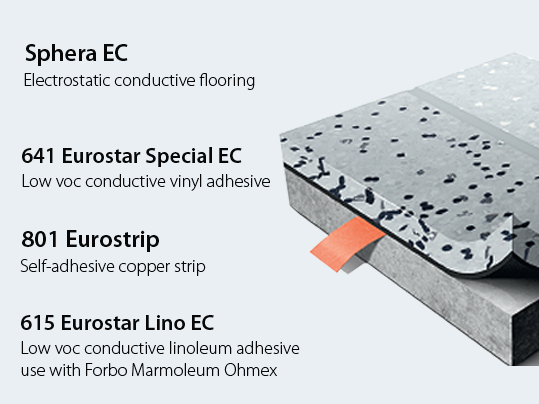
A compliant ESD system using Forbo Sphera EC typically includes:
- Sphera EC sheet flooring – a homogeneous vinyl floor with carbon black chips dispersed throughout to provide permanent conductivity.
- Conductive adhesive – used to bond the floor covering to the subfloor, maintaining conductivity through the entire installation.
- Copper earthing strip – installed beneath the floor and connected to the building’s earth point. This ensures that static charges collected on the floor surface are safely transferred to ground.
Our static control flooring ranges


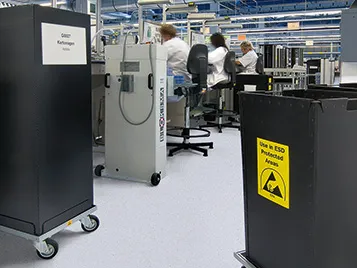
Forbo static control flooring classifications
| Ranges | Intensity load | ESD control | Format | Repairable | Slip rating |
| Colorex SD | Extreme | Static dissipative | Tile | Repairable | R9 |
| Colorex EC | Extreme | Electrostatic conductive | Tile | Repairable | R9 |
| Colorex plus EC | Heavy | Electrostatic conductive | Tile | Repairable | R9 |
| Colorex plus basic | Heavy | Antistatic | Tile | Repairable | R9 |
| Sphera SD | Moderate | Static dissipative | Sheet | - | R10 |
| Sphera EC | Moderate | Electrostatic conductive | Sheet | - | R10 |
| Marmoleum Ohmex | Moderate | Static dissipative | Sheet | - | R10 |
Note: Material is laboratory tested. Site conditions such as substrate, humidity, temperature and installation methods may impact the results in relation to the lower limit of static resistance. Always confirm the project brief and check with the client, electrical engineer, or ESD specialist before specifying a floor. The equipment used, the process type, and the sensitivity of the environment will determine whether EC, SD, or standard antistatic flooring is most suitable.
Still not sure which system fits your project?