Designing Inclusive Rail Interiors
Accessibility and neurodiversity in train design
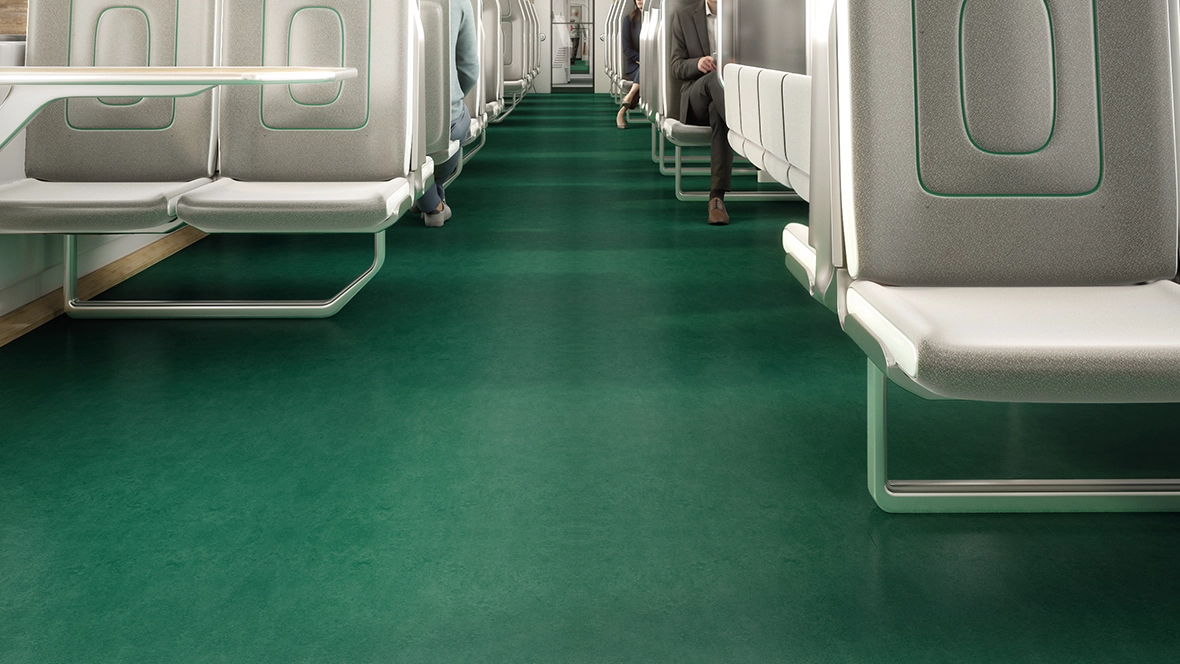

Accessibility in rail design has historically focused on step-free access, wheelchair spaces, priority seating and contrasting colours. While these remain essential, inclusive design addresses a much broader range of passenger needs. True inclusivity means creating environments that are easy to navigate, understand and feel comfortable in, not just physically accessible.
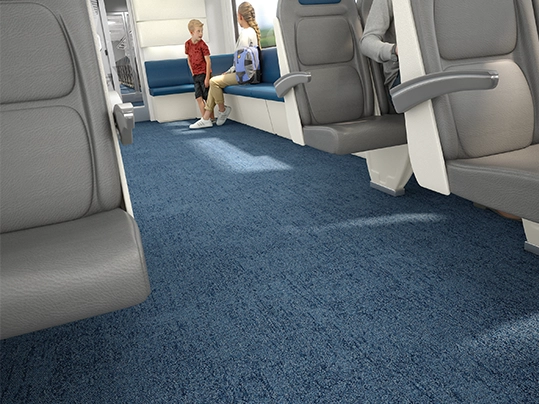
Rail interiors are inherently complex, and floor coverings are influential surfaces in how passengers experience that complexity. Movement, changing light, noise and crowding can create high levels of sensory input; for some passengers (including those with autism spectrum disorder or dementia) this can contribute to cognitive overload, anxiety or disorientation. Thoughtful floor covering selection helps set the visual and acoustic tone of the carriage and supports calmer, more readable spaces.
Managing cognitive load:
Flooring is a primary spatial cue: colour zoning, subtle texture changes and consistent thresholds can help passengers understand where to stand, sit and move through the carriage. When floor layouts are visually busy or inconsistent, decision-making becomes harder and stress can increase.
Reducing visual complexity:
Highly patterned floor coverings or abrupt contrast bands can be distracting or disorienting, particularly in aisles and door zones. More subtle designs create calmer interiors and support intuitive wayfinding.
Sensory regulation (light and sound):
Glossy floor surfaces can reflect luminaires and daylight, creating glare and ‘moving’ highlights that can distort perception, while matt finishes keep the floor area more readable.
Floor covering choice plays a major role in how the space feels and performs. Acoustic, cushioned finishes can reduce passenger and wheel noise in vestibules and circulation areas, helping the carriage feel calmer and quieter.
Predictability and familiarity:
Consistency in floor covering choice, texture and transitions within a carriage and across a fleet, helps passengers rely on familiar cues for doors, aisles and seating bays. Frequent changes in flooring style or zoning may look appealing but can add uncertainty and increase cognitive load for neurodivergent users.
Accessible rail interiors rely on passengers being able to interpret the space quickly and move through it with confidence and the floor covering is central to that. Floor covering choice influences contrast, glare, perceived level changes, slip confidence, comfort and the clarity of routes through the carriage.
Visual Clarity and Legibility:
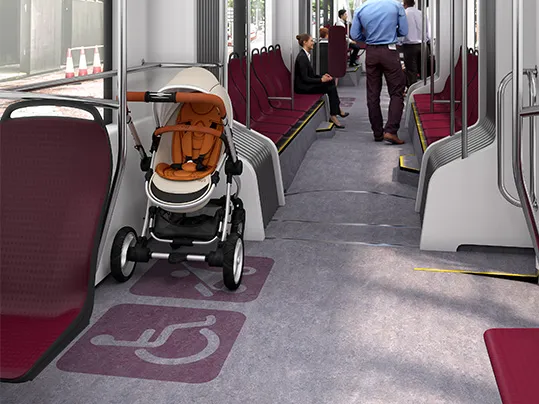
Floor coverings help passengers distinguish routes, door zones and seating areas from surrounding surfaces. Clear but not harsh tonal contrast between floor, wall and fixtures is essential for defining boundaries and supporting safe movement. As a guide, specifying around a 30 Light Reflectance Value (LRV) point difference between the floor and adjacent surfaces can support visibility and orientation. However, excessive contrast can create false perceptions of steps, gaps or obstacles particularly for passengers with visual impairments or cognitive sensitivity.
Controlled Use of Contrast:
Flooring contrast should guide movement, not confuse it. Smooth, consistent transitions at doorways, gangways and between carriage zones reduce hesitation and help passengers move confidently through the interior.
Wayfinding:
Flooring can reinforce wayfinding by subtly differentiating key rail zones (for example, vestibules, aisles and priority areas) through texture or tonal shifts rather than strong graphics. Keeping patterns minimal helps passengers focus on signage, door locations and the overall layout.
Surface Finishes:
Floor coverings with matt, low-glare finishes improve surface readability and help passengers judge footing, especially where lighting changes near doors. Combined with appropriate slip resistance, this supports confidence for those with visual impairments.
Inclusive rail design is not about adding specialist features, but about removing barriers through considered, consistent material choices including floor coverings. By selecting floor coverings with balanced tonal contrast, minimal visual clutter, low glare finishes and acoustic comfort, designers can make rail interiors more intuitive, calmer and easier to navigate for a wider range of passengers.
These improvements benefit all passengers, not just those with specific needs, supporting greater confidence, independence and ease of travel across the network for everyone.