When The Floor Tells The Story
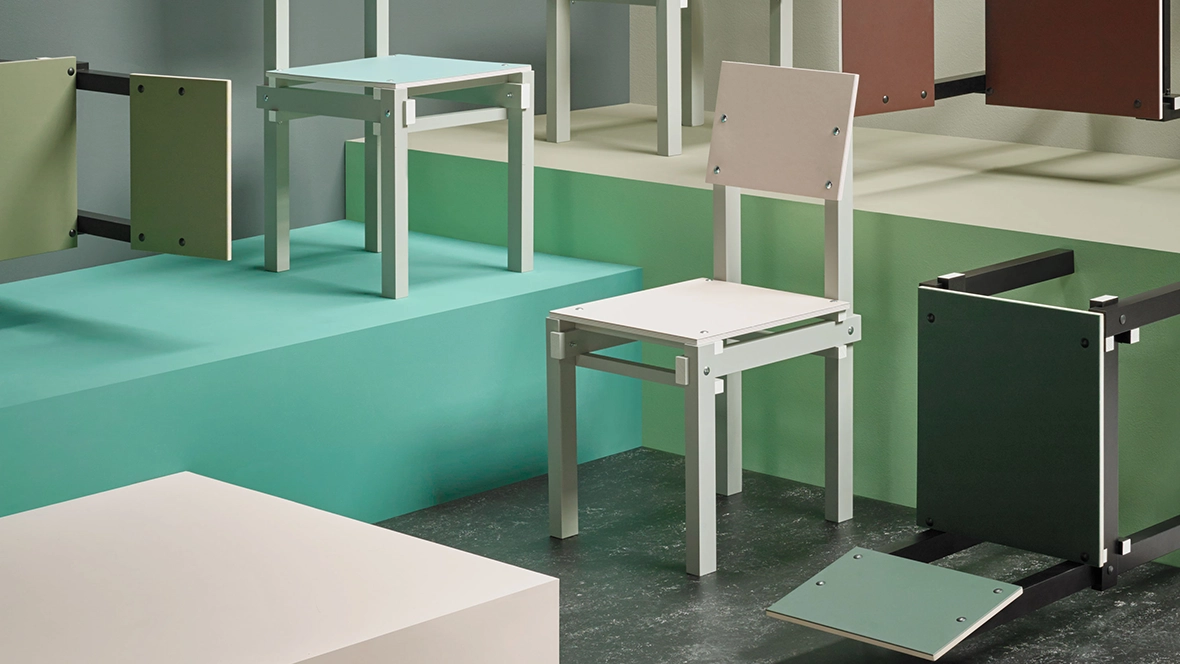

Some designers leave behind buildings. Others leave behind furniture. Dutch architect and furniture designer Gerrit Rietveld (1888–1964), one of the leading figures of the De Stijl movement, left behind something more enduring: a design philosophy that continues to reveal itself decades later. Best known for the Red and Blue Chair and the Rietveld Schröder House, his influence can still be found in iconic designs and, sometimes, hidden beneath another floor.
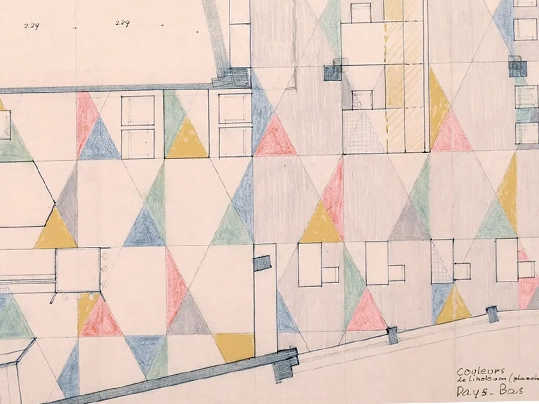
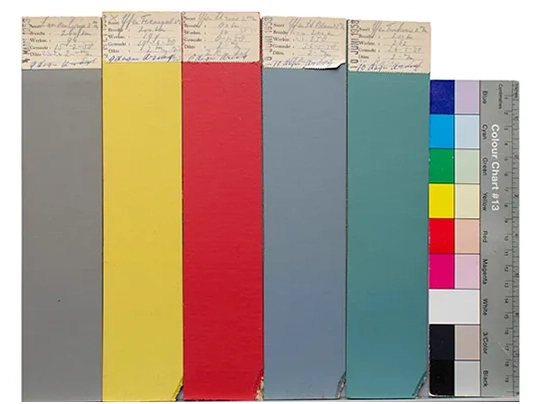
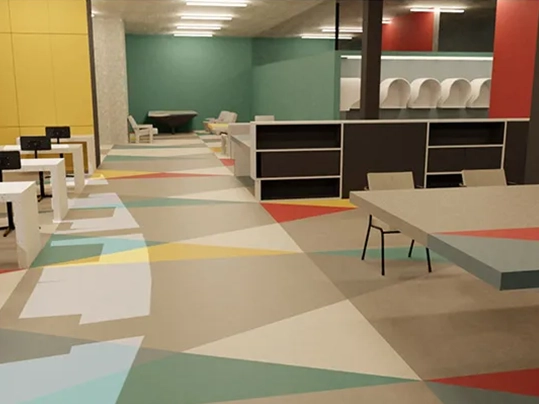
One of the most recent discoveries took place in the UNESCO Press Room in Paris, designed by Rietveld in 1958. During research commissioned by the Cultural Heritage Agency of the Netherlands (RCE), conservator and researcher Santje Pander uncovered sections of the original Marmoleum beneath a later raised floor. By comparing the discovered flooring with historic samples preserved in the Forbo archive, researchers were able to identify the original colours and layout, providing valuable insight into Rietveld's vision and helping to guide the restoration of one of his most remarkable interiors. The discovery demonstrated how an original floor can reveal the history of a building and provide an authentic foundation for its restoration. For us at Forbo, seeing archive samples help bring Rietveld's original vision back into view is a genuinely exciting reminder of how material knowledge can keep design history alive.
**Example of a plan design of the room by Rietveld dated February 1957 (image: Het
Nieuwe Instituut, Rotterdam, Rietveld, G.Th./ Archief (RIET), inv.nr. 534).
A 3D digital model of the original room, using archival Marmoleum colour samples as reference,
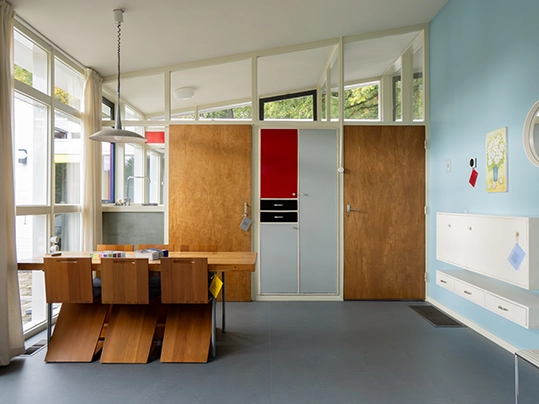
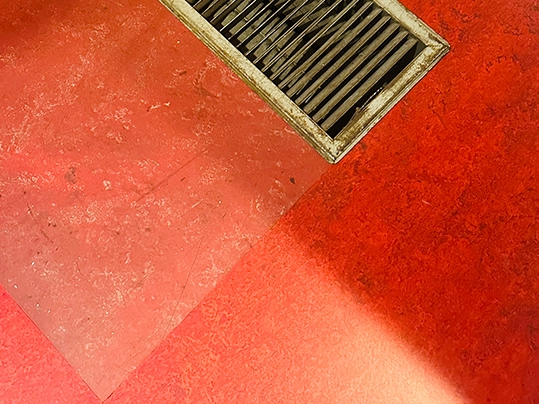
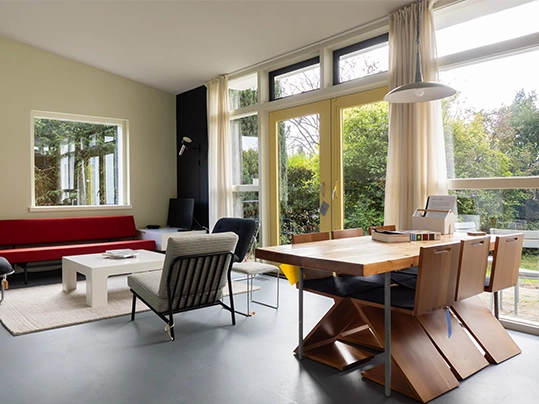
The UNESCO Press Room is not the only place where Rietveld's work has been rediscovered through Marmoleum. Between 1954 and 1955, Rietveld designed Huis Slegers in Velp, the Netherlands, a home with an attached artist's studio, commissioned by visual artist Piet Slegers and his wife, Gerda. Supporting the conservation team of the Hendrick de Keyser Foundation, Forbo Designer Thomas Eurlings helped investigate the original Marmoleum flooring to ensure the renewed interior remained as faithful as possible to Rietveld's design. Remarkably, several of the original colours closely matched colours still available in today's Marmoleum collection, enabling the restoration team to use contemporary Marmoleum while preserving the original colour palette and design intent.
Projects like these highlight an often-overlooked aspect of Rietveld's work. Marmoleum wasn't simply a finishing material; it formed part of the overall architectural composition, contributing to the colour and character of the space. Today, the restored house is available for holiday stays through the Hendrick de Keyser Foundation. Guests who look closely can still spot preserved sections of the original Marmoleum floor, carefully integrated into the new Forbo floor installed during the restoration.
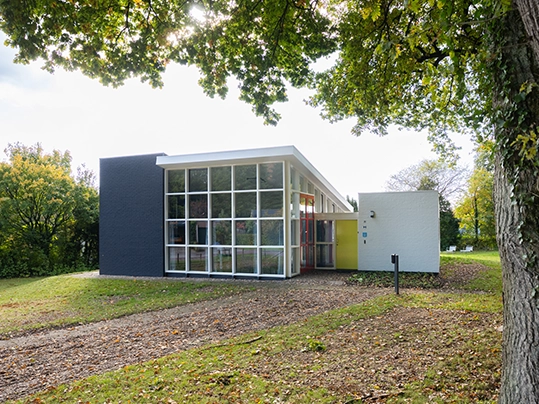
Exterior and interior views of Huis Slegers in Velp, the Netherlands, showcasing the renewal of the original 1955 Marmoleum flooring with colours 3756 | Neptune and 3127 | Bleecker Street.
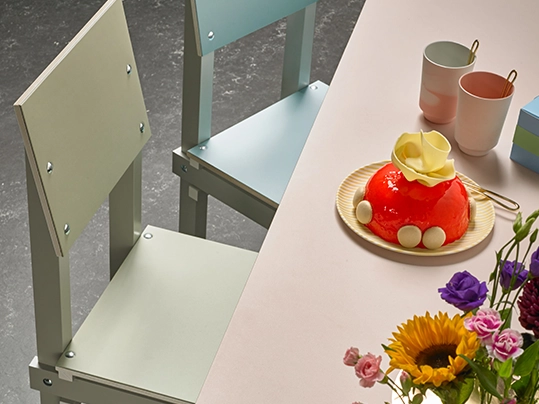
Rietveld's influence extends beyond restoration. In 2019, Forbo collaborated with Lensvelt and Rietveld Originals during Dutch Design Week to reinterpret Rietveld's Military Chair using our Furniture Linoleum. The collaboration produced a special-edition series of six chairs finished in contemporary and classic colours, celebrating the shared heritage between one of the Netherlands' most influential designers and a material that has remained relevant for generations.
One of the chairs from the series, the Pistachio edition, returned to the international stage at Salone del Mobile in 2025, demonstrating the timeless appeal of both Rietveld's design and Furniture Linoleum. Rather than recreating the past, the collaboration showed how Rietveld's ideas continue to inspire contemporary design and new generations of designers.
Great design never truly disappears. It can be uncovered beneath later layers of flooring, preserved through the careful restoration of a home, or reinterpreted in an iconic chair for a new generation. More than sixty years after Gerrit Rietveld's final projects, his work continues to demonstrate that every surface has a purpose. Rietveld's enduring relationship with linoleum is a reminder that great materials don't simply finish a space; they help define its story.