3 Days of Design Copenhagen 2026

The annual 3 Days of Design in Copenhagen has rapidly grown into one of Europe’s most influential design events, attracting an increasingly international audience of design professionals, brands, architects, specifiers, and design enthusiasts.
Copenhagen’s 3 Days of Design offers, compared to Salone in Milano a more intimate and accessible experience. The event is distinguished by its strong focus on materials, craftsmanship, and practical design applications, while also providing a prominent platform for emerging designers.
Its program is deeply rooted in Nordic values such as simplicity, functionality, and sustainability.
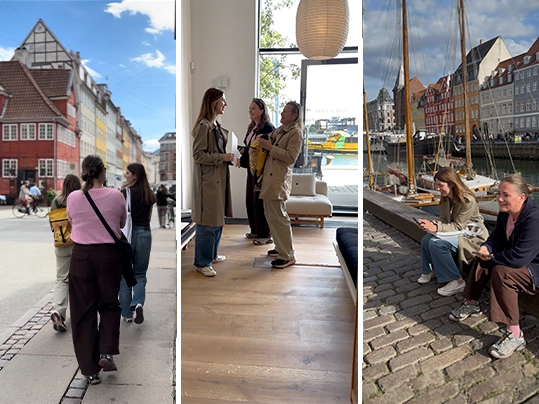
Our designers Kita and Britt attended the event to explore emerging trends, innovative materials, and design approaches that could help shape and inspire future flooring collections.
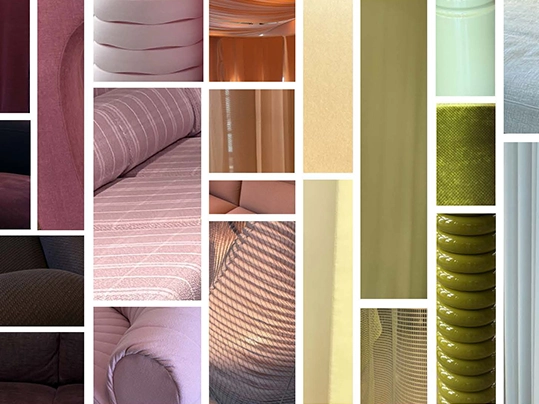
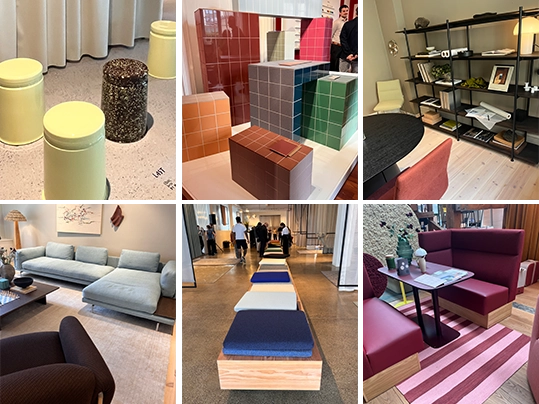
Overall, the palette is authentic and material-driven, creating spaces that feel warm, tactile, and connected to the physical world.
Light tones are elegant and layered, inspired by natural materials such as silk and handmade paper.
Warm mid-tones add subtle colour and richness through their textured surfaces. Accents of pale blue, mint, soft yellow greens and butter yellows bring freshness and a contemporary edge.
Darker shades like greens, burgundies, and wine tones add sophistication and depth. By absorbing light, they create a sense of comfort, intimacy, and grounding.
Designers continue to embrace colour with confidence, creating expressive interiors that combine playful palettes with a sense of joy and creativity.
At the same time, designers explored colour dualities, pairing earthy, natural tones with vibrant, digitally influenced hues to create spaces that felt both energizing and grounded.
Remarkable combinations included greenish-yellow paired with warm red-brown wood tones, and rich blues contrasted with natural wood finishes, resulting in emotionally rich and balanced interiors.
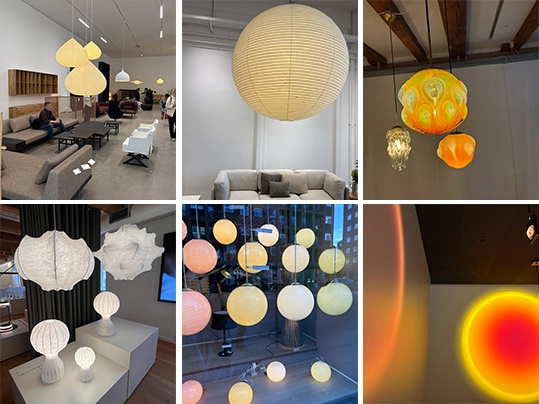
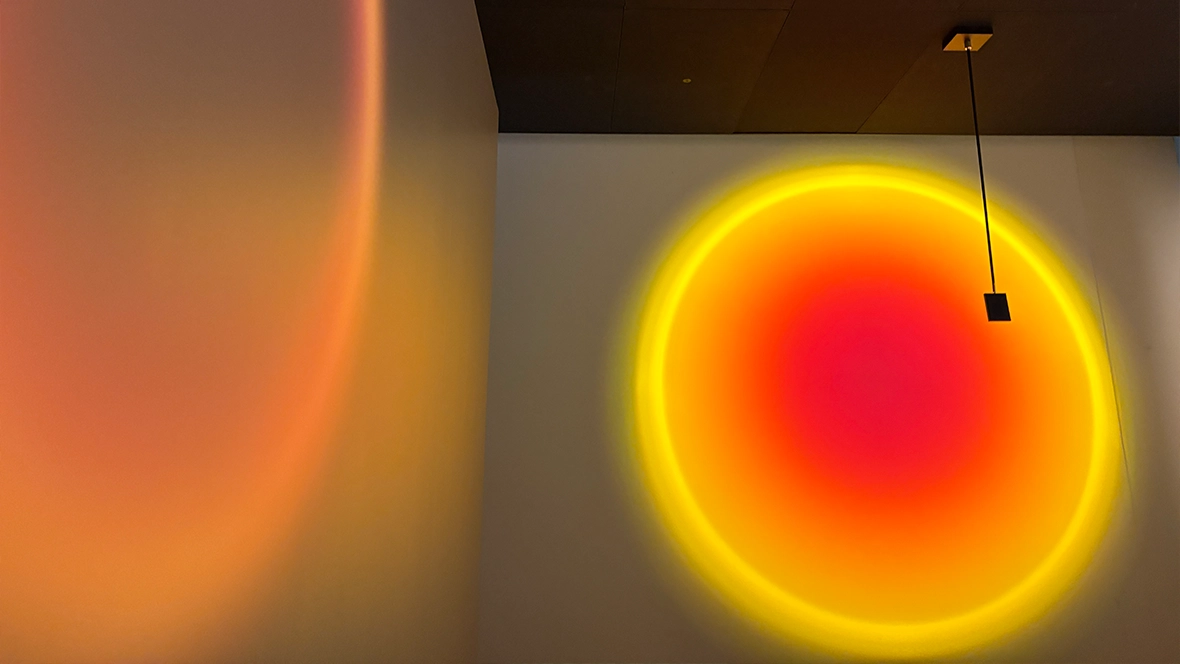
Light was a key design theme, with designers exploring its reflection, diffusion, and ability to shape atmosphere. Warm, ambient lighting dominated, while new technologies enhanced atmosphere, colour, and depth through indirect illumination, soft reflections, and subtle halo effects.
Oversized lamps in large and XXL organic blob-like forms, became striking focal points, functioning as architectural objects that draw attention within a space.
Materials where opaque and translucent inspired by the delicate qualities of paper and natural materials. Overall, these developments turned lighting into both a functional and emotional element of the space.
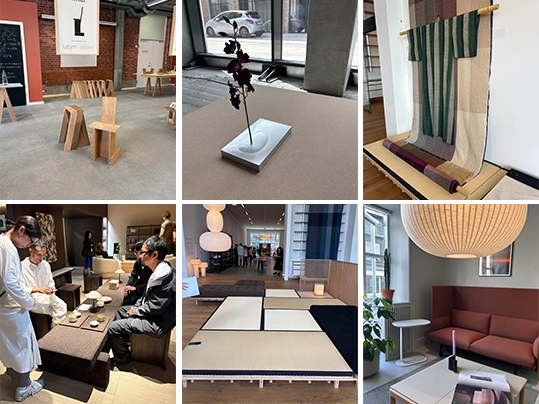
Japan’s minimalist aesthetic and the beauty of natural materials was a clear theme.
Deep appreciation for Japanese craftsmanship was reflected in lacquerware, woodworking, paper, ceramics, and hand-crafted seating.
This influence extended beyond the objects themselves to presentations featuring ikebana floral arrangements, tatami mat references, and even a traditional tea ceremony.
Beyond visual inspiration, these works embodied a distinctly Japanese way of thinking, one that values simplicity, harmony, attention to detail, and a deep connection between people, objects, and nature.
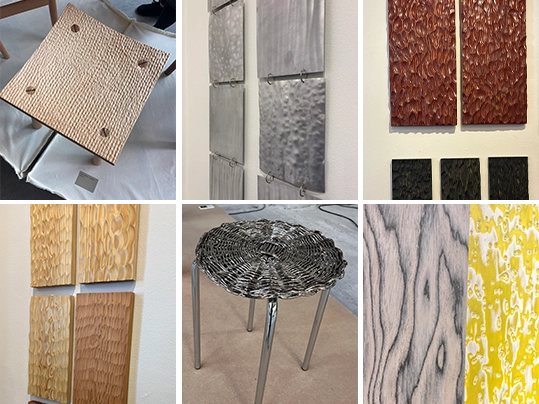
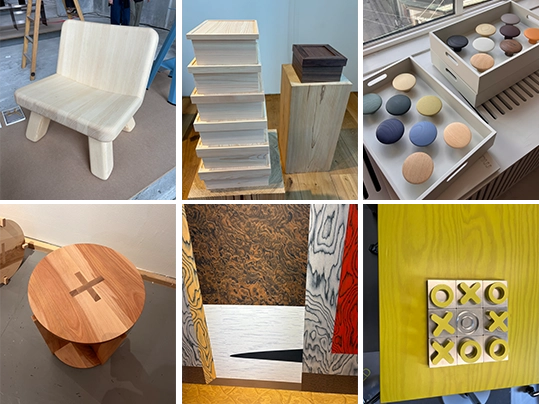
As seen in Milan, the embrace of raw, natural materials remained a defining theme across many installations. Designers celebrated imperfections as expressions of authenticity and craftsmanship, showcasing textured wood, hand-cast aluminium, and other materials in their most honest form.
High-gloss finishes continued to give way to brushed, carved, oxidized, and patinated surfaces, adding depth, tactility, and character.
Metals were predominantly presented in soft satin finishes, creating a refined and understated aesthetic, while coloured metal finishes introduced a subtle layer of richness and individuality.
Wood played a prominent role, with brushed and carved finishes highlighting the natural character of the material.
Craftsmanship was emphasized through visible joinery, where construction details became decorative features in their own right.
The preferred wood species were clean and refined, with minimal knots and linear grain patterns. Oak was less prominent, while pine, birch, and burl wood gained popularity.
Wood colours gravitated towards either light natural tones or deep, dark finishes, often enriched by warm reddish undertones.
Coloured finishes that allowed the wood grain to remain visible added depth and texture, bringing an extra dimension to the material.