
Linoleum vs Vinyl Flooring
They may appear similar, but they're not!
The difference between linoleum and vinyl flooring
Both linoleum and vinyl are both classified as resilient flooring. But they're made from fundamentally different materials, carry different environmental credentials, and perform best in different areas of the same building.
Think of it this way: Linoleum is made using an age-old traditional recipe. The ingredients are natural, the process is slow and deliberate, and the result has barely changed in 170 years because it doesn't need to.
Vinyl is more like a modern industrial process - made from PVC (polyvinyl chloride), engineered with built-in layers, and designed to be optimised for specific performance or visual design outcomes.
Linoleum has environmental advantages, while vinyl can be used in areas where linoleum cannot.
Forbo makes Marmoleum linoleum and a full range of commercial vinyl flooring, including homogeneous vinyl, heterogeneous vinyl, luxury vinyl tile, and safety flooring - our job is to help you choose the right product for the right environment.
What they're actually made from
Linoleum: Nature's recipe
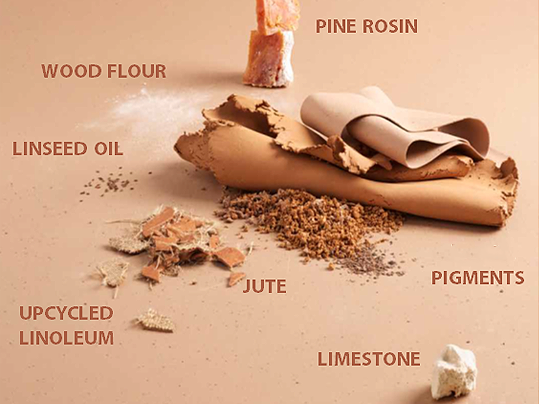
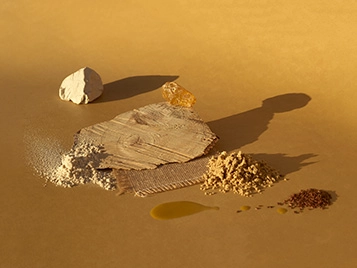
Marmoleum (linoleum) start in a field. Linseed oil is pressed from the seeds of the flax plant, which has been grown for thousands of years. That oil is processed, then blended with natural tree resins, wood flour, limestone and jute – a plant-based fibre used as the backing.
Up to 98%* of what goes into Marmoleum comes natural raw materials. Many of those ingredients are renewable and grow back season after season.
The manufacturing process is slow and controlled. The linseed oil is oxidised, then left to cure naturally before being combined with the other ingredients and pressed onto the jute backing under heat.
Watch how we make linoleum
Vinyl: Precision engineering
Vinyl flooring starts in a very different place: A chemical plant, not a field. Vinyl is a synthetic, PVC-based product.
The primary ingredient is PVC (polyvinyl chloride), a synthetic polymer produced from petroleum and salt through an industrial process. That raw material is then engineered into flooring in one of two ways. This allows for a wide range of designs, finishes, and performance characteristics.
• Heterogeneous vinyl - the layered approach
• Homogeneous vinyl - the single layer
Heterogeneous vinyl: The layered approach
Think of heterogeneous vinyl like a sandwich. Multiple distinct layers, each doing a specific job. Typically, a backing layer and fibreglass fleece for stability, a printed design layer for aesthetics, and a clear wear layer for durability. Each layer is engineered independently, which gives heterogeneous vinyl enormous flexibility. The print layer can replicate wood, stone, textile finishes or a bespoke design.
This layered construction is what makes heterogeneous vinyl so widely specified in general commercial areas where design flexibility and durability must work together.
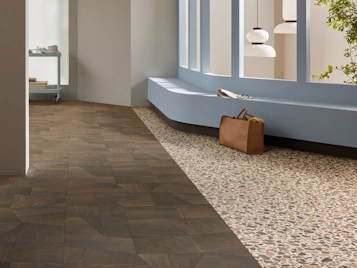
Homogeneous vinyl: The single layer
Homogeneous vinyl takes a different approach entirely. Instead of multiple layers, it's made from a single, consistent layer of material; the same composition from the surface all the way through to the base.
Think of it less like a sandwich and more like a slab - the colour and composition are consistent at every depth. The surface is repairable. Homogeneous vinyls are specified often in healthcare and clinical environments.
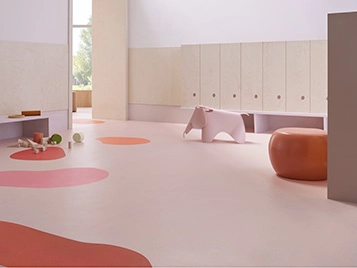
Vinyl’ and ‘Lino’ are commonly used to describe resilient flooring. Technically, linoleum (Lino) is a specific natural product. Vinyl is a separate category entirely. Sometime the two are confused, but they are made from different materials.
Environmental credentials
Where linoleum leads
For projects targeting sustainability, reduced embodied carbon, or Green Star Responsible Products credits, linoleum carries credentials that vinyl cannot match.
Climate positive by production without offsetting
Marmoleum is climate positive (also called carbon negative) from cradle to gate without purchasing carbon credits. The photosynthesis of the biobased raw materials used in Marmoleum provides CO₂ uptake that exceeds the CO₂ emissions from production.
This is built into the material, not achieved through offsets or credits. Read more about Marmoleum's climate positive credentials.
Independently verified certifications
Marmoleum holds the following certifications relevant to Green Star projects:
• GECA (Good Environmental Choice Australia)
• Declare Red List Free label
• Independently verified Environmental Product Declarations (EPDs)
• TVOC emissions test certificate
Forbo uses Life Cycle Assessments (LCAs) independently verified and published as EPDs -providing the documentation specifiers and ESD consultants need to make a defensible specification decision. Download the Marmoleum EPD
Vinyl also carries environmental certifications
Vinyl ranges are not without sustainability credentials. Most carry:
• GreenTag certification
• Independently verified EPDs
• Best Environmental Practice PVC (BEP PVC).
These are recognised under Green Star's Responsible Products credits.
The difference is embodied carbon at the production stage - not the absence of certification.
If your brief prioritises sustainability, Green Star, or reduced embodied carbon:
Specify linoleum in general areas such as corridors, open-plan spaces, learning areas, offices, and communal zones. It is the strongest environmental specification available in commercial flooring and carries credentials.
On the same project, these aren't competing choices:
Most commercial projects specify both. Marmoleum in general areas for its sustainability credentials and long-term environmental story. Vinyl in specialist zones or in general areas too, where vinyl design is the preferred visual preference. The products are designed to work alongside each other, and together they cover every area of a building brief.
The distinctions between linoleum and vinyl
Slip resistance
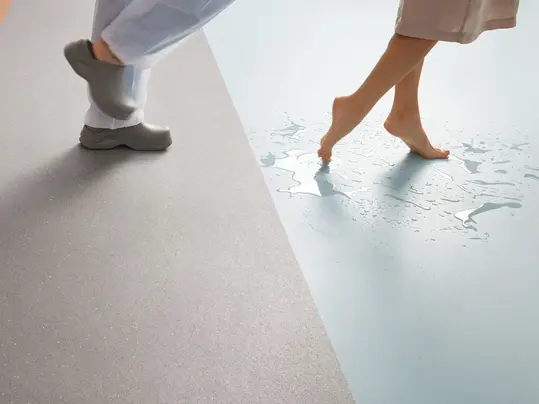
Linoleum does not offer particle-based slip resistance. For areas that require a sustainable slip resistance rating for wet areas, commercial kitchens, ensuites and barefoot zones, vinyl safety flooring is the appropriate specification. This is the performance feature linoleum structurally cannot replicate and the clearest reason why most commercial projects specify both.
Forbo's Step safety vinyl flooring covers:
Surestep R10 — general walking areas with increased slip risk
Safestep R11/R12 — extreme conditions where spills are continuous
Wetroom solutions — continuously wet and barefoot areas
The slip resistance in Step is particle-based and runs throughout the wear layer, not just the surface providing durable, long-term performance that complies with AS 4586-2013.
Linoleum hardens overtime & is inherently antibacterial
A meaningful difference between linoleum and vinyl traces back to one ingredient: linseed oil that no synthetic material can replicate.
When linseed oil is exposed to oxygen, it undergoes a chemical reaction: polymerisation. This is what binds all of Marmoleum's natural ingredients together and gives the floor its initial hardness. But the reaction doesn't stop at the factory; the floor continues to harden throughout its life.
Linseed oil also has natural bacteriostatic properties. The oxidation process that hardens the floor creates a surface environment that inhibits bacterial growth, not through an applied antimicrobial coating, but through the chemistry of the material itself.
Explore the ranges covered here
Frequently asked questions
Q: Does Marmoleum linoleum need to be regularly recoated or re-waxed?
No, and this is one of the most persistent misconceptions about modern linoleum. Forbo Marmoleum linoleum collections are easy to clean and maintain, thanks to Topshield Pro, our durable factory finish. It has been designed to create a 'ready to use' linoleum flooring that requires no initial maintenance or polymer application.
The recoating requirement applies to old-generation linoleum manufactured before factory-applied finishes were introduced. Marmoleum linoleum with Topshield Pro does not need to be stripped and recoated as part of its maintenance regime.
Q: How does Marmoleum linoleum compare to vinyl for maintenance?
Marmoleum linoleum with Topshield Pro and vinyl sheet flooring have comparable maintenance requirements for routine cleaning. The meaningful differences are:
- Marmoleum does not require periodic polymer recoating - a misconception inherited from the old generation of linoleum that appears on many comparison sites
- Marmoleum is inherently antibacterial, a property of linseed oil that requires no surface treatment and does not diminish over the life of the floor
Q: Is linoleum the same as vinyl?
No. Linoleum is a natural product made from linseed oil, wood flour, limestone, resin and jute. Vinyl is a synthetic, PVC-based product. They look similar but are made from different materials.
Q: Is linoleum more sustainable than vinyl?
At the production stage, yes: Marmoleum is climate positive (carbon negative) from cradle to gate without offsetting. Vinyl flooring is not climate positive at production, though vinyl ranges carry environmental certifications including GreenTag Level A and independently verified EPDs. For projects targeting the lowest embodied carbon in general areas, linoleum is the preferred choice.
* Natural raw material content varies by Marmoleum product type. View 2.5 mm Marmoleum Sheet technical specifications for full details.